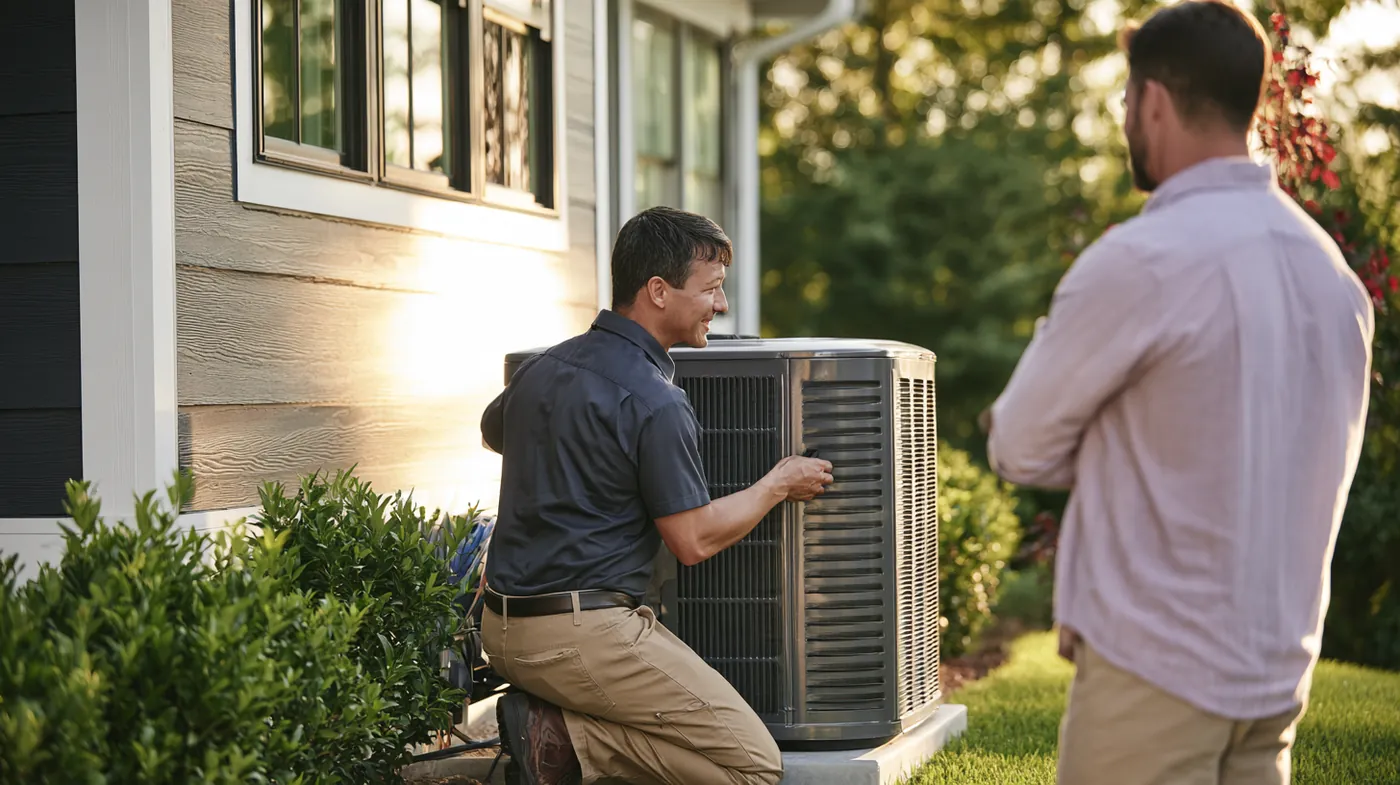
A $2,500 loan is the amount people tend to need when something big breaks or something urgent happens far from home: a failed air conditioner in August, a last-minute flight to a sick parent, or a restock order that has to be paid before the busy season starts. It is a common personal loan size because it is large enough to fix the problem in one move.
We run a free request service, not a lender. One form lets lenders in our network review your request and possibly respond with offers. You compare them and decide, and you never owe us anything. If your money stash cannot cover $2,500 today, this guide shows what that borrowing may cost and how to keep it under control.
When Does a $2,500 Loan Make Sense?
A $2,500 loan makes the most sense when the expense is urgent, the cost is known, and you can comfortably afford an estimated monthly payment of roughly $125 to $250 for one to three years.
Borrowing at this size is a real personal loan commitment. Even at a moderate estimated APR, interest over 24 months can run several hundred dollars. The question is not whether you can get approved, but whether the thing you are paying for is worth that extra cost compared with waiting, negotiating or patching together cash.
Signs a personal loan may be the right fit:
- Waiting makes it worse. A dead AC unit in a heat wave, a leaking roof before a storm, or a missed flight that doubles in price tomorrow.
- The quote is in writing. You know the actual number, not a guess, so you can request exactly what you need.
- The payment fits. After rent, utilities, food and existing debts, you still have money left over each month with the loan payment included.
- The alternative costs more. Putting a $2,500 repair on a card at a 29% purchase rate with minimum payments can take years to clear.
Signs a $2,500 loan may not fit: you are borrowing to cover another loan's payment, your income is uncertain for the next few months, or the expense could wait until you save part of it. A moneystash rule of thumb: if your money stash could grow by the full amount within three months of cutting back, saving usually wins. Likewise, if you could save the full amount within three months by cutting back, saving usually wins.
Common Uses: HVAC, Family Travel and Small Inventory
Three of the most common reasons people request a 2500 dollar loan are replacing or repairing a home heating and cooling system, paying for urgent travel to family, and buying inventory for a small side business.
A failed air conditioner or furnace
Say Carmen's 15-year-old AC compressor fails in late July. The technician quotes $2,350 for a new condenser coil and compressor, or $6,000 and up for a full system. She chooses the repair, and a $2,500 loan covers the parts, labor and a permit fee. Ask your contractor whether they offer their own financing, then compare the APR and total cost side by side with any personal loan offer you receive.
Emergency travel
When Jamal learned his father was hospitalized two states away, last-minute round-trip flights for him and his teenage son came to about $1,300. Add a week at a budget hotel near the hospital, a rental car and meals, and the trip reached $2,400. A personal loan covered the gap when his own money stash ran short. Ask airlines about bereavement or medical-emergency fares, and keep receipts in case any portion is refundable.
Small business inventory
Rosa sells handmade candles online and at weekend markets. Before the holiday season, her wax, wick and jar supplier offers a 12% bulk discount on a $2,500 order. Our guide on whether a $2,500 loan can cover small business inventory walks through the margin math. Remember that a personal loan used for business is still your personal debt, so many sellers keep the inventory order modest.

Estimated Monthly Payments on a $2,500 Loan
A $2,500 loan repaid over 24 months costs an estimated $124.81 per month at 18% APR, $133.42 at 24.99% APR, or $147.61 at 35.99% APR, before any fees the lender may charge.
The table below shows estimated payments across 12, 18 and 24-month terms. Treat every personal loan figure as an estimate; the lender sets your actual APR and term after reviewing your application.
| APR | 12 months | 18 months | 24 months |
|---|---|---|---|
| 18% APR | $229.20/mo $250.40 interest | $159.51/mo $371.26 interest | $124.81/mo $495.45 interest |
| 24.99% APR | $237.60/mo $351.18 interest | $167.97/mo $523.41 interest | $133.42/mo $701.99 interest |
| 35.99% APR | $251.14/mo $513.71 interest | $181.76/mo $771.66 interest | $147.61/mo $1,042.53 interest |
What the numbers say about trade-offs:
- Short term, lower total cost. At 24.99% over 12 months, you would pay about $237.60 a month and roughly $351.18 in interest.
- Longer term, lighter payment. The same rate over 24 months drops the payment to about $133.42, but interest climbs to about $701.99.
- Rate is the multiplier. At 35.99% over 24 months, total interest reaches about $1,042.53, more than 40% of what you borrowed.
Mainstream personal loan APRs commonly run from about 6% to 36%, and lenders serving lower credit scores may charge more. An origination fee of a few percent, often subtracted from your deposit, means you could receive less than $2,500 while still repaying the full balance. If you need the full amount in hand, ask the lender how the fee is applied to your $2,500 loan. Our personal loan rates explainer covers how fees fold into APR.
What Lenders Look at Before Approving $2,500
Lenders reviewing a $2,500 personal loan request typically weigh your credit score, verifiable monthly income, existing debt payments and recent account history, then decide whether to approve and at what estimated APR.
At $2,500, many personal loan lenders still consider fair credit, but scrutiny is a step up from smaller amounts. Expect more attention to two numbers in particular.
Debt-to-income ratio
Your debt-to-income ratio, or DTI, is your monthly debt payments divided by gross monthly income. If you earn $3,800 a month and already pay $950 toward a car loan and cards, your DTI is 25%. Adding an estimated $133 loan payment brings it to about 28.5%, a level many personal loan lenders consider workable. Above roughly 40%, approvals get harder and rates higher.
Credit history
For a $2,500 loan, a score in the 690-plus range usually brings more offers and lower rates. In the 600s, approval is still possible, but expect APRs closer to the top of the range and possibly a request for a co-signer or proof of longer job tenure. Recent late payments, collections or several new accounts in a short time count against you more than an older, resolved problem.
Lenders also commonly ask for a government-issued ID, recent pay stubs or bank statements, a checking account in your name and your Social Security number. For a full breakdown of score bands and documents, see the personal loan eligibility requirements.
Moneystash tip: pay down a credit card balance a few weeks before you apply if you can. Lower utilization can lift your score and your odds.
How Quickly a 2500 Dollar Loan Can Reach Your Account
Once you are approved and sign the agreement, some lenders can send a 2500 dollar loan as soon as the next business day, while others take several business days for final verification and the bank transfer.
Speed depends heavily on how prepared you are. The steps that most often slow things down are within your control:
- Blurry or mismatched documents. If the name on your pay stub differs from your ID, or a photo is cropped, the lender will ask again.
- Bank account mismatch. Funds usually go only to an account in your own name.
- Late-day or weekend signing. An agreement signed Friday evening often funds Monday or Tuesday.
For an HVAC repair, many contractors will schedule the work once you confirm a payment date, so ask about a short delay rather than accepting a high-rate in-house plan under pressure while you wait for a personal loan to fund. For travel, a credit card may cover the ticket today while the personal loan funds in a few days, but only do this if you will pay that card off as soon as the deposit arrives, before interest posts.
Be wary of anyone who promises same-hour cash for $2,500 regardless of credit, or who asks for a fee by gift card, wire or app before releasing funds. Legitimate personal loan lenders do not ask for upfront payments to fund a loan.
Cheaper Paths to Consider Before You Borrow $2,500
Before taking a $2,500 loan, check for cheaper options such as contractor or utility rebate programs, manufacturer warranties, a home warranty claim, a 0% promotional offer you can clear in time, or help from family.
The right alternative depends on what you are paying for:
- HVAC repair: check whether the compressor or parts are still under manufacturer warranty, which commonly runs five to ten years on registered equipment. Some utilities offer rebates on high-efficiency replacements, and some states run weatherization or energy-assistance programs.
- Family emergency travel: ask the hospital's social worker about local lodging programs for families, and ask airlines about flexible-change policies. Some employers offer emergency hardship funds.
- Inventory: ask your supplier for net-30 or net-60 terms, which let you sell the goods before paying for them. A smaller first order may also reduce risk.
You can also split the cost: put $1,000 from your money stash toward the bill and borrow the rest. A smaller balance means less interest and leaves part of your money stash intact for later; our $2,000 loan page shows how payments look one step down.
Skip single-payment cash advances, title loans and pawn loans for an expense this size. Compared with a $2,500 loan on installment terms, their fees can translate to triple-digit APRs, and repayment in one lump sum is rarely realistic for $2,500. If none of the cheaper paths work, a fixed-rate installment loan with a clear end date is usually the safer option among what remains.
Comparing $2,500 Personal Loan Offers Side by Side
Comparing $2,500 personal loan offers means lining up the APR, origination fee, amount actually deposited, monthly payment, term length and total repaid for each, then choosing the lowest total cost you can comfortably afford each month.
Two personal loan offers with similar monthly payments can differ by hundreds of dollars over the life of the loan. Use the personal loan calculator to test each one, and check these points:
- APR, not just interest rate. APR includes required fees, so it is the better comparison number.
- Net proceeds. A 5% origination fee on $2,500 is $125. If it is deducted up front, you receive $2,375. If you need the full $2,500, you may need to request slightly more.
- Total repaid. Multiply the monthly payment by the number of months. That figure tells you what the loan really costs.
- Prepayment terms. Most personal loans allow early payoff with no penalty. Confirm it in writing.
- Late fees and grace period. Know how many days you have before a fee posts and before the lender reports a late payment.
- Autopay discount. Some personal loan lenders lower the rate slightly if you enroll in automatic payments.
People who search money stash online often want a quick yes, but the best decision is usually the slower one. Take a day with your $2,500 loan offers, compare the totals, and decline anything that feels rushed. There is no obligation to accept an offer received through our network.
Steps to Request a 2500 Dollar Loan With Us
Requesting a $2,500 loan through our network takes one online form of a few minutes; lenders that respond may present offers, and you choose whether to continue with any of them, at no cost to you.
- Gather your quote and documents. Have the contractor's estimate, travel receipts or supplier invoice ready, along with your ID, income proof and bank details.
- Choose your term on paper first. Decide whether a 12, 18 or 24-month payment fits your budget before you see offers, so a longer term does not tempt you.
- Submit the request. Enter the $2,500 loan amount, purpose, income and contact details accurately.
- Review responses. Lenders in our network may run a soft credit check to show you estimated terms. A hard check usually comes only when you continue with a specific lender.
- Finish with the lender. Complete verification, read the full agreement and sign only if every number matches what you expected.
Not every personal loan request is matched, and approval decisions rest with lenders, not with us. If no offer appears, it may help to request a smaller amount, add a co-signer where the lender allows it, or spend 60 to 90 days paying down card balances before trying again.
Readers who search moneystash or money stash usually arrive with a thin cushion and a big bill. The moneystash approach is simple: borrow the exact amount, pick the shortest term you can handle and plan your payoff before you sign.
Protecting Your Money Stash After a $2,500 Expense
Protecting your money stash after a $2,500 expense starts with a written payoff plan, an automatic monthly payment, and a small parallel savings transfer so one emergency does not become a cycle of borrowing.
Moneystash tip: label your savings account with the goal, such as "AC fund," so the money feels committed.
A large repair or emergency trip often shows you exactly where your budget is thin. Use that lesson while it is fresh:
- Price the next one. A moneystash plan budgets for replacement, not just repair. HVAC systems typically last 12 to 20 years. If yours was repaired rather than replaced, start a separate fund for eventual replacement, even $30 a month.
- Schedule maintenance. A yearly tune-up often costs less than $150 and is far cheaper than a $2,500 loan; it can catch small problems before they become a major repair.
- Keep a travel buffer. If you have family far away, a few hundred dollars set aside for short-notice trips can reduce how much you borrow next time.
- Track inventory turns. For a side business, record how quickly the stock you financed actually sells, and pay down principal from each batch of sales.
When the loan is paid off, keep sending the same payment amount to savings for at least six months. At $133 a month, that rebuilds about $800, a solid start toward covering the next surprise without new debt. If anything threatens your ability to pay along the way, call the lender before you miss a payment; early contact keeps more options open.
Frequently Asked Questions
Can I get a $2,500 loan to fix my air conditioner?
In most cases, yes. Personal loans can generally be used for home repairs, including HVAC work. Get a written quote first so you request the right amount, and compare any contractor financing against the APR and total cost of a personal loan offer. The lender decides whether to approve the request and sets the terms.
What credit score do I need for a 2500 dollar loan?
There is no single cutoff, because each lender sets its own criteria. Borrowers with scores of about 690 or higher usually see more offers and lower estimated APRs. Some lenders consider scores in the 600s, often at higher rates. Steady income and a manageable debt-to-income ratio can matter as much as the score itself.
How much interest will I pay on a $2,500 loan over 18 months?
At an estimated 18% APR, interest would total about $371.26. At 24.99% it would be about $523.41, and at 35.99% about $771.66. These figures assume a fixed rate and no fees; your actual cost depends on the APR, term and any origination fee in the lender's offer.
Can I use a $2,500 personal loan for business inventory?
Some lenders allow personal loans to be used for small business expenses such as inventory, while others restrict business use, so read the loan purpose terms. Remember that you are personally responsible for repayment even if the business sells slowly. Keep business and personal records separate to track whether the stock you financed actually pays for itself.
Repayment options for a $2,500 personal loan
Three common repayment terms for a $2,500 loan are compared below at an estimated 24.99% APR, so you can see how a longer term lowers the payment but raises total interest.
Estimates only. Use the loan calculator to test your own APR and term.
